


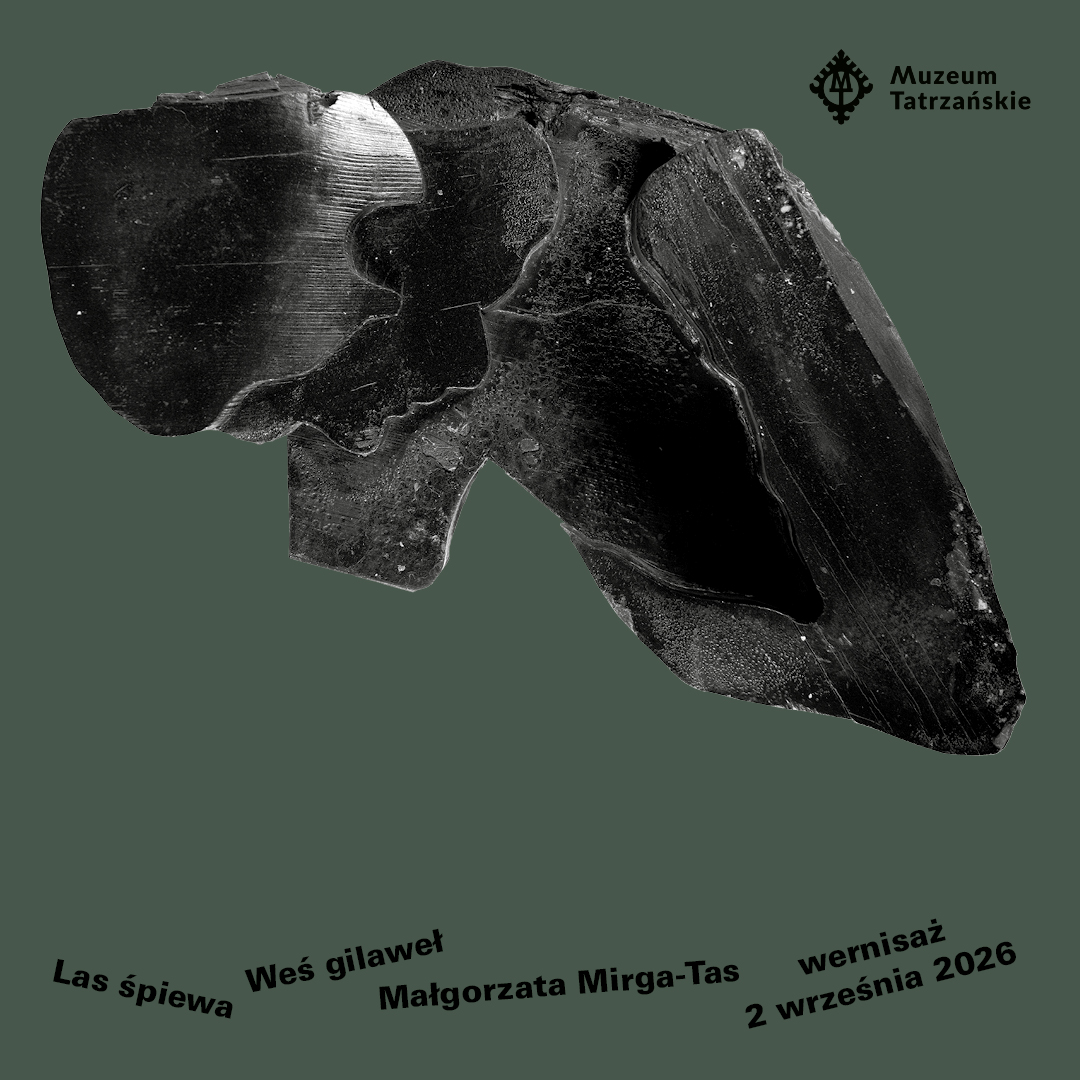
Wernisaż rezydencji artystycznej oraz wystawy „Weś gilaweł / Las śpiewa / The forest Is singing”, 2 września
Serdecznie zapraszamy na wernisaż rezydencji artystycznej oraz wystawy „Weś gilaweł / Las śpiewa / The forest Is singing” Małgorzaty Mirgi-Tas, który odbędzie się 2 września (środa) o godzinie 17:00 w Muzeum Palace, ul. Chałubińskiego 7.
Wstęp wolny w ramach promocji Muzeum Tatrzańskiego
Uprzejmie informujemy, że przy Muzeum Palace nie są dostępne miejsca parkingowe. Prosimy o parkowanie pojazdów podczas wernisażu na parkingu przy Galerii Sztuki w Willi Oksza, ul. Zamoyskiego 25 oraz przy Galerii Władysława Hasiora, ul. Jagiellońska 18 b.
Rezydencja artystyczna oraz wystawa „Weś gilaweł / Las śpiewa”
Małgorzaty Mirgi-Tas
Rezydencja artystyczna oraz wystawa jest rzeźbiarsko-tekstylną, wieloelementową instalacją site-specific przygotowaną specjalnie dla Muzeum Palace, które mieści się w budynku dawnej zakopiańskiej siedziby Gestapo, będącym szczególnie traumatycznym miejscem pamięci na mapie miasta oraz regionu.
Artystka powraca do swoich wcześniejszych, tematyzujących Zagładę Romów i Sinti prac, po raz pierwszy jednak tak otwarcie odnosząc się do okupacyjnej historii własnej rodziny i innych Romów Karpackich w czasie II wojny światowej na terenach okupowanych przez III Rzeszę. Las śpiewa jest w tym sensie najbardziej osobistą i „podhalańską” wystawą artystki. Małgorzata Mirga-Tas opowiada traumatyczną historię rodzinną, jednocześnie problematyzując sposoby konstruowania historii. Pokazuje miejsca, w których historia milczy, narracja rozpada się i rodzi się potrzeba, by opowiedzieć przeszłość w inny sposób.
Las śpiewa to pierwsza instytucjonalna wystawa artystki w Zakopanem.
O artystce:
Małgorzata Mirga-Tas to romska artystka, edukatorka i aktywistka. Jej twórczość koncentruje się na przełamywaniu antyromskich stereotypów oraz budowaniu pozytywnej, afirmatywnej ikonografii społeczności romskich. Jej prace przedstawiają codzienność: relacje międzyludzkie, więzi społeczne i wspólne działania. Charakterystyczne dla artystki kolaże tekstylne powstają z materiałów i tkanin pozyskanych od rodziny i przyjaciół, co nadaje im osobisty, bliski wymiar. Zasłony, koszule, biżuteria czy prześcieradła splecione w barwne kompozycje stają się nośnikami mikrohistorii – opowieści jednostkowych, które wnikliwie komentują i przekształcają dominujące narracje społeczne.
W 2004 roku ukończyła Wydział Rzeźby Akademii Sztuk Pięknych w Krakowie. Jej prace były prezentowane na licznych wystawach indywidualnych i zbiorowych, m.in. w: Kunsthal Chartlottenborg w Kopenhadze (2025), Kusntmuseum w Wolfsburgu (2025–2026), Kunsthaus w Bregencji (2025), Kunstmuseum w Lucernie (2025), Tate St Ives (2024–2025), Bonnefanten w Maastricht (2024), Centro Andaluz de Arte Contemporáneo w Sewilli (2023–2024), na Manifesta 16 (2026), Triennale w Kortrijk (2024), w Barbican Centre w Londynie (2023), Brücke Museum w Berlinie (2023), podczas 14. Biennale w Gwangju (2023), w Konsthall w Goteborgu (2023), na documenta 15 (2022), w Międzynarodowym Centrum Kultury w Krakowie (2022), Triennale w Kantonie (2022), 11. Biennale w Berlinie (2020), Biennale Art Encounters w Timișoarze (2019, 2021), 3. Autostrada Biennale w Prisztinie (2021) oraz w Muzeum Sztuki Nowoczesnej w Warszawie (2020, 2025).
W 2022 roku Małgorzata Mirga-Tas reprezentowała Polskę na 59. Biennale Sztuki w Wenecji. Jest pierwszą w historii Biennale romską artystką, której prace pokazywano w pawilonie narodowym. Mieszka i tworzy w Czarnej Górze.
Kurator: Wojciech Szymański
PARTNER WYDARZENIA: Fundacja Jaw Dikh
PATRONAT HONOROWY: Burmistrza Miasta Zakopane
PATRONAT MEDIALNY: Tygodnik Podhalański, 24tp.pl, Radio 357
Wystawę będzie można oglądać od 3 września 2026 r. do 31 stycznia 2027 r. w Muzeum Palace, ul. Chałubińskiego 7.
Dofinansowano ze środków Ministra Kultury i Dziedzictwa Narodowego, w ramach zadnia: „Reinterpretacja zasobów archiwalnych Muzeum Tatrzańskiego”.
Artist residency and exhibition ‘Weś gilaweł / The forest Is singing’
by Małgorzata Mirga-Tas
The artist residency and exhibition is a multi-part, site-specific installation combining sculpture and textiles, created especially for the Palace Museum, which is housed in the building that formerly served as the Gestapo headquarters in Zakopane – a particularly traumatic site of remembrance on the map of the town and the region.
The artist returns to her earlier works, which addressed the genocide of the Roma and Sinti. However, this is the first time she has so openly discussed her own family’s history and that of other Carpathian Roma during the Second World War in territories occupied by the Third Reich. In this sense, The Forest Is Singing is the artist’s most personal and „Podhale-inspired” exhibition to date. Małgorzata Mirga-Tas recounts her family’s traumatic history while simultaneously questioning how history is constructed. She reveals places where history falls silent, where the narrative unravels and where there is a need to recount the past differently.
The Forest Is Singing is the artist’s first institutional exhibition in Zakopane.
About the artist:
Małgorzata Mirga-Tas is a Romani artist, educator and activist. Her work focuses on challenging anti-Romani stereotypes and building a positive, affirming iconography of Romani communities. Her works depict everyday life: interpersonal relationships, social bonds and shared activities. The artist’s signature textile collages are created from materials and fabrics sourced from family and friends, which lends them a personal, intimate dimension. Curtains, shirts, jewellery and bedsheets woven into colourful compositions become vessels for micro-histories – individual stories that offer insightful commentary on and reshape dominant social narratives.
In 2004, she graduated from the Faculty of Sculpture at the Academy of Fine Arts in Kraków. Her works have been shown in numerous solo and group exhibitions, including at: Kunsthal Charlottenborg in Copenhagen (2025), the Kunstmuseum in Wolfsburg (2025–2026), the Kunsthaus in Bregenz (2025), the Kunstmuseum in Lucerne (2025), Tate St Ives (2024–2025), the Bonnefanten in Maastricht (2024), the Centro Andaluz de Arte Contemporáneo in Seville (2023–2024), at Manifesta 16 (2026), the Kortrijk Triennial (2024), the Barbican Centre in London (2023), the Brücke Museum in Berlin (2023), at the 14th Gwangju Biennale (2023), at the Konsthall in Gothenburg (2023), at documenta 15 (2022), at the International Cultural Centre in Kraków (2022), the Guangzhou Triennial (2022), the 11th Berlin Biennale (2020), the Art Encounters Biennale in Timișoara (2019, 2021), the 3rd Autostrada Biennale in Pristina (2021) and at the Museum of Modern Art in Warsaw (2020, 2025).
In 2022, Małgorzata Mirga-Tas represented Poland at the 59th Venice Biennale. She is the first Romani artist in the history of the Biennale to have her work exhibited in a national pavilion. She lives and works in Czarna Góra.
Curator: Wojciech Szymański
HONORARY PATRONAGE: Burmistrz Miasta Zakopane
MEDIA PATRONAGE: Tygodnik Podhalański, 24tp.pl, Radio 357
The exhibition will be on view from 3rd September 2026 to 31st January 2027 at the Palace Museum, street Chałubińskiego 7.
Project co-financed by the Ministry of Culture and National Heritage as part of the task: ‘Reinterpretation of the Archival Resources of the Tatra Museum’.